Most local businesses still measure visibility by website clicks. That is the wrong scoreboard for 2026. Customers now make decisions inside Google Maps, AI summaries, review panels, call buttons, and direction cards before they ever land on a website. That is why local SEO trust engineering is becoming the practical discipline behind local visibility.
The shift is simple: platforms are not only ranking pages anymore. They are deciding which businesses are credible enough to summarize, cite, map, recommend, or place in front of a customer at the moment of intent. A restaurant, plumber, clinic, salon, or franchise location can lose demand even with a polished website if its business profile is incomplete, reviews are thin, or category data is inconsistent.
This guide explains how local discovery is changing across Maps, AI answers, and zero-click search. It also gives business owners a step-by-step way to audit and improve the trust signals that now shape local visibility.
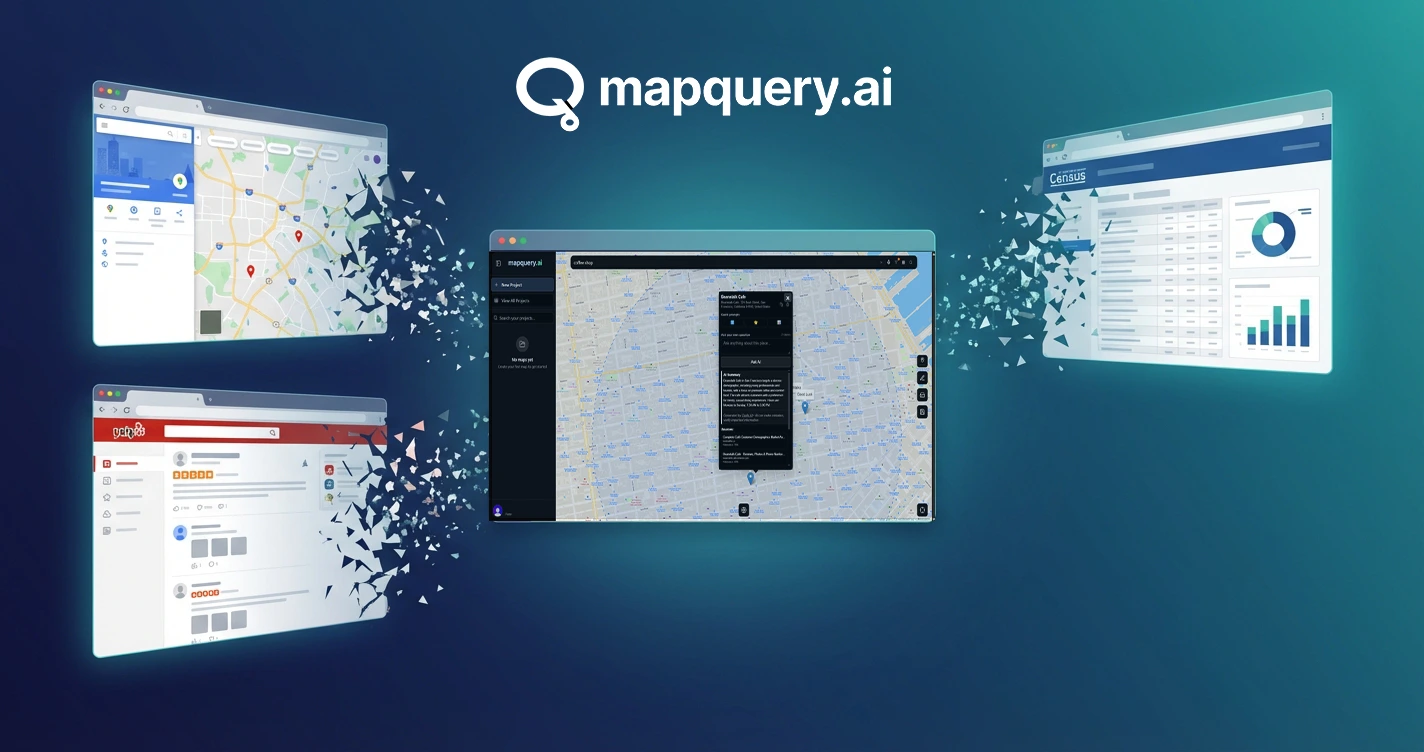
Local visibility in 2026 is decided before most users click a link. AI answers, Maps panels, and zero-click search surfaces pull from trust signals: reviews, profile accuracy, category consistency, and current local data. MapQuery.ai helps business owners monitor these signals with live location intelligence from sources like Yelp, TripAdvisor, and Instagram.
Local SEO Trust Engineering Across Maps
Local SEO trust engineering is the process of building verified, consistent, review-backed signals that help search engines, map platforms, and AI answer systems trust a local business.
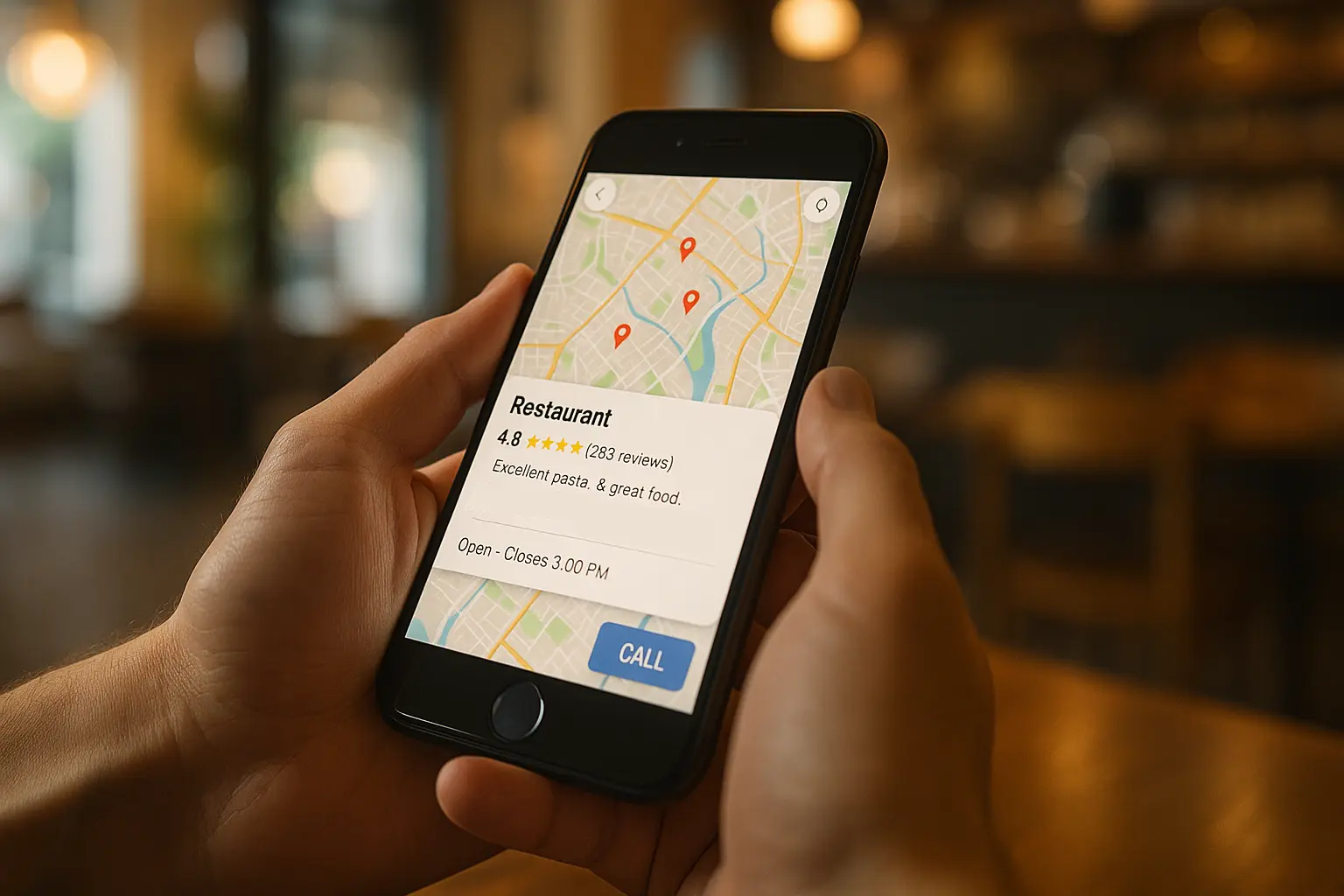
Traditional local SEO focused on keywords, citations, landing pages, and backlinks. Those still matter, but they are no longer enough. A customer searching for “best emergency plumber near me” may see a Google local results block, review snippets, an AI-generated summary, hours, distance, and a call button without clicking any website.
That experience changes the work. Your Google Business Profile, review content, category selection, hours, photos, and cross-platform consistency become part of the product. They are not just supporting SEO assets. They are the evidence that Maps and AI systems use to decide whether your business belongs in the answer.

What Changed in Local Discovery
Three years ago, local businesses competed primarily for clicks. You wanted a customer to search, see your business, click your site, and convert there.
That path still exists, but it is no longer the default for many local intent queries. A customer can search “best Italian restaurant near downtown” and get a full decision interface inside Google: a map with business listings, star ratings, recent review snippets, business hours, photos, directions, booking links, and an AI-style summary of top options. Google AI Overviews now appear on more than 30% of queries, and local packs appear first in 93% of local searches.
The platform becomes the destination, not the doorway.
For business owners, that means the signals that matter most have shifted. Search platforms are asking trust questions:
- Is this business verified?
- Is the profile complete?
- Are the hours current?
- Are reviews recent and specific?
- Does the same business information appear consistently across platforms?
- Do customers describe the business in ways that match the searcher’s intent?
Those are not just SEO questions. They are operational trust questions. The businesses that answer them best win more visibility in zero-click environments.
Market Insight
SparkToro and Datos have repeatedly reported that a large share of Google searches end without a click. For local businesses, that means Maps panels, reviews, and answer surfaces often do the work a website visit used to do.
How Maps, AI Answers, and Zero-Click Experiences Work Together
Maps, AI answers, and zero-click experiences are not separate local discovery systems. They overlap and reinforce each other.
Google Maps is the geographic layer. It shows pins, distance, hours, photos, categories, and reviews. When a search has local intent, Maps data powers much of the experience a customer sees.
AI answers are the synthesis layer. AI systems summarize what they can verify across Maps, business profiles, review platforms, and web sources. They compress many signals into a short recommendation or answer. According to Search Engine Land’s analysis of AI’s impact on local search, AI Overviews now appear in 68% of local searches compared to 39% for traditional local packs, and they tend to dominate early-stage discovery queries with narrative summaries that cite only one or two businesses.
Zero-click search is the user behavior that follows. A customer gets enough information from the result page to call, navigate, compare, book, or move on without visiting your website.
This is why local SEO trust engineering matters. These systems all draw from overlapping trust data, and they all reward businesses with complete, current, corroborated information.
Reviews Are Trust Infrastructure, Not Just Stars
Reviews are one of the most direct trust signals a local business can build. In 2026, the text inside those reviews matters as much as the rating. Moz ranks review signals as the second most influential local ranking category, covering quantity, velocity, diversity, recency, and keyword content. Research analyzing 3,269 businesses found that in the top 10 local positions, review count accounts for 26% of ranking decisions and review keyword relevance for another 22%, making reviews the dominant differentiator once proximity is held equal.
A generic five-star review helps. A specific review helps more:
“Great espresso near downtown Austin, fast service, and easy parking on 5th Street.”
That sentence gives humans and AI systems several useful signals at once:
- Category: espresso and cafe
- Location: downtown Austin
- Attribute: fast service
- Access detail: parking on 5th Street
- Sentiment: positive
AI systems read reviews as structured language, not just sentiment. Specific reviews help answer engines understand what your business does, where it fits, and why customers choose it.
Review response strategy also matters. Businesses that respond to positive and negative reviews send an active-presence signal. They show that the owner is engaged, the profile is maintained, and customer feedback is current. Google’s own local ranking guidance explicitly lists responding to reviews as a way to improve local visibility, noting it shows that a business values its customers.
For a deeper workflow on interpreting local review language, see MapQuery’s guide to sentiment analysis tools for local market research.

Profile Accuracy Is the Foundation of Trust Engineering
If reviews are the social proof layer, profile accuracy is the structural layer.
Profile accuracy means more than a correct address. It means your business name, address, phone number, categories, hours, website, photos, and descriptions are consistent across the platforms customers and AI systems use.
Common local trust problems include:
- A slightly different business name on Yelp than on Google Maps
- Old hours on a secondary listing
- A broad category when a more specific one is available
- Missing service areas
- No recent photos
- A profile with strong reviews but weak owner responses
These issues reduce confidence. If an AI answer system sees conflicting information across sources, it has less reason to cite your business. BrightLocal’s breakdown of Google’s local algorithm explains that prominence, the pillar most influenced by reviews and profile completeness, is evaluated across every surface that mentions your business, not just your Google Business Profile. If Maps users see outdated or thin profile data, they have less reason to act.
The work is unglamorous, but it is high leverage. Trust engineering in local SEO starts with accurate, complete, consistent data across every surface that feeds Maps and AI answers.

How to Build a Local SEO Trust Engineering Practice Step by Step
Trust engineering is not a one-time setup. It is a repeatable operating practice. Start with this workflow.
Step 1: Audit your baseline
Check your business profile data across Google Maps, Yelp, TripAdvisor, and other relevant local platforms. Record review count, average rating, most recent review date, category, hours, photos, and owner response activity.
Step 2: Compare against competitors
Audit your top three local competitors the same way. AI and Maps systems make comparative decisions, so your trust position only makes sense relative to nearby alternatives.
Step 3: Fix inconsistencies first
Standardize your name, address, phone, categories, hours, and website before chasing more review volume. Clean data gives every other trust signal a stronger foundation.
Rio SEO’s 2025 local search trends report
identifies consistent citations as one of the top AI search visibility factors, noting that unstructured mentions across directories and news sources now feed directly into AI-generated recommendations.
Step 4: Build a specific review pipeline
Ask for reviews at the right moment and encourage customers to mention the service, product, neighborhood, or problem solved. Specific reviews create better evidence for both customers and AI systems. Note that the
FTC’s August 2024 rule banning fake reviews
prohibits compensating customers for reviews or selectively suppressing negative ones. Authentic, unprompted-feeling requests are both the ethical and the algorithmically safer path.
Step 5: Respond and monitor monthly
Respond to reviews within a consistent window, then recheck your local market each month. Competitors change, sentiment shifts, and new listings can alter your relative visibility quickly.
The goal is not to chase a perfect score. The goal is to make your business easier to trust, easier to verify, and easier to cite than nearby competitors.

MapQuery.ai: Best for Monitoring Local Trust Signals
MapQuery.ai was built for location intelligence decisions where live local data matters. Its core value is simple: ask anything about a market or neighborhood, and MapQuery turns live web data into clear insights for your business.
For local SEO trust engineering, that means you can inspect the trust signal landscape around your business instead of guessing.
Best for
Local businesses, franchise operators, and location-based teams that need to compare reviews, competitors, and market context in real time.
Free tier
10 daily credits, 3 saved projects, 50 locations per project
Pro tier
1,000 monthly credits, unlimited projects, 500 locations per project, advanced filtering, and priority email support
MapQuery’s six core features map directly to local trust work:
- See What’s Around You: Find nearby similar businesses, see where they cluster, and spot local gaps.
- Just Ask a Question: Ask plain-English questions about reviews, competitors, busy areas, or customer sentiment.
- Customer Pulse: See what people love and complain about at nearby businesses.
- Saved Map Markers: Keep key locations and competitor pins organized inside a project.
- Save Your Research: Revisit saved projects without rebuilding your work.
- Saved AI Results: Preserve AI answers and sources so you can track market changes over time.
One honest limitation: MapQuery.ai is focused on live web and review-based location intelligence. If your local SEO project depends on proprietary clickstream data, private call-tracking data, or direct access to Google Search Console impressions, you will still need those tools alongside MapQuery.
Built by GeoAsset LLC | mapquery.ai | See current pricing at mapquery.ai/pricing
Real-World Use Cases
These scenarios show how local SEO trust engineering changes decisions for different types of operators.
The independent restaurant owner
Maria runs a 40-seat Italian restaurant in a downtown market with six direct competitors within a half-mile. After mapping the market, she finds that two newer restaurants have three times her recent review volume and many reviews mention the neighborhood by name. She starts asking happy diners for specific reviews and responds to every review within 48 hours. Four months later, her review volume and Maps visibility are much stronger without paid promotion.
The multi-location service business
Derek owns three plumbing and HVAC locations across one metro area. Each location has a slightly different name format across platforms, and two have outdated hours. After standardizing all three profiles and monitoring competitor review signals monthly, he becomes easier to verify for emergency-intent local queries.
The franchise operator choosing a new site
Priya is comparing two possible franchise sites with similar traffic profiles. One market has two dominant competitors with deep review moats, while the other has fragmented competition and weaker profile data. She chooses the second site because the local trust signal bar is lower and the path to visibility is clearer.
Frequently Asked Questions
What is local SEO trust engineering?
Local SEO trust engineering is the process of building verified, consistent, review-backed signals that help Maps, AI answers, and zero-click search surfaces trust and cite a local business.
Why do zero-click searches matter for local businesses?
Zero-click searches matter because customers often choose a business directly from Maps panels, AI summaries, call buttons, directions, reviews, and answer cards without visiting the business website.
Are Google reviews still important for local SEO in 2026?
Yes. Google reviews remain one of the strongest local trust signals because they influence human decisions, Maps rankings, and the language AI systems use when summarizing local options.
How do AI answers affect local business visibility?
AI answers affect local business visibility by summarizing trusted sources into a short recommendation, often before a user clicks through to any website. Businesses with accurate profiles, recent reviews, clear categories, and corroborated information are easier for AI systems to cite.
Can a small business compete with large chains in AI and Maps results?
Yes. Small businesses can compete when they maintain accurate profiles, earn recent specific reviews, respond consistently, and monitor how their trust signals compare with nearby competitors.
What tools help businesses monitor local trust signals?
MapQuery.ai helps businesses monitor local trust signals by pulling live data from sources like Yelp, TripAdvisor, and Instagram so owners can compare competitors, sentiment, and market patterns.
Final Thoughts
Local SEO trust engineering is not a future trend. It is the operating reality for local businesses in 2026. Customers who used to visit your website now get answers from Maps panels, AI summaries, review snippets, and zero-click cards before they decide what to do next.
The businesses that win are not always the ones with the most polished websites. They are the ones with clean profiles, credible reviews, and consistent data across every platform that feeds local discovery.
Start with a baseline audit. Fix your profile data. Build a review pipeline. Monitor your market monthly. That work is practical, measurable, and available to any local business willing to treat trust as an operating system.

Start Your Local Trust Signal Audit
MapQuery.ai gives you live local intelligence from sources like Yelp, TripAdvisor, and Instagram so you can see where you stand against competitors. Start free now!