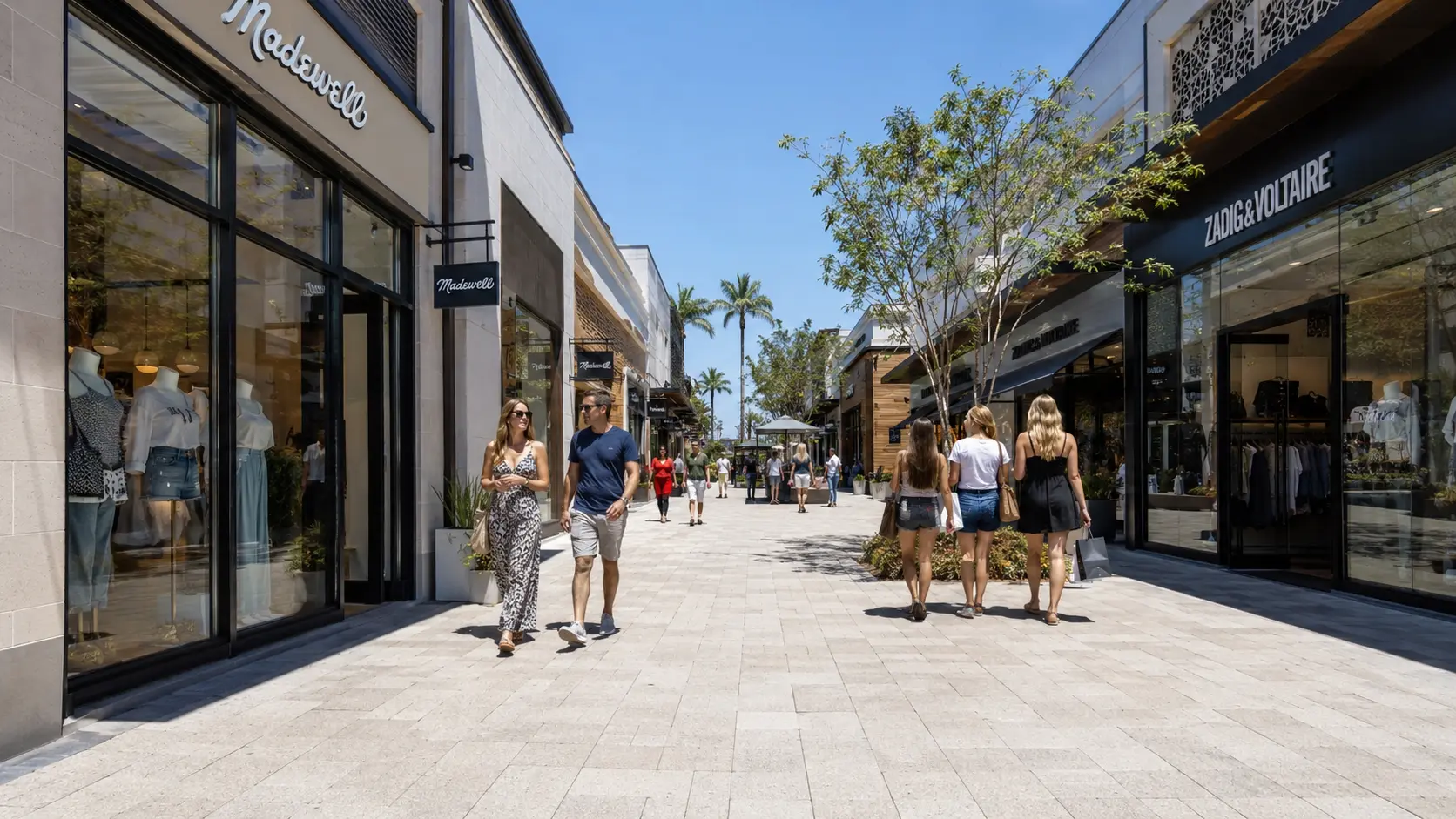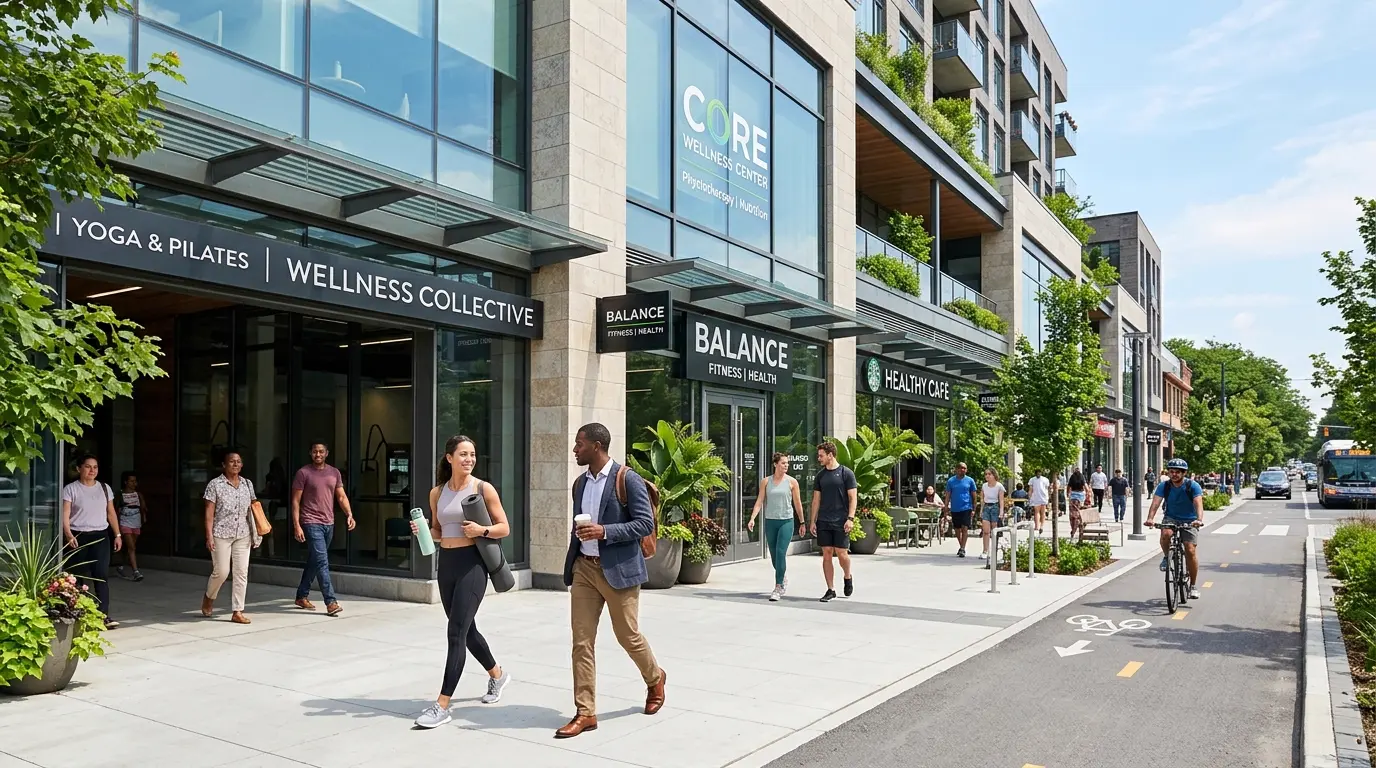
Wellness as the new anchor tenant is not a prediction anymore. Service-oriented tenants, led by wellness and fitness businesses, leased over 50% of total US retail space in 2025, surpassing goods-based retailers for the first time, according to CoStar data reported by the Wall Street Journal. Gyms, boutique fitness studios, and med-spas have replaced department stores as the primary foot-traffic drivers in US retail centers.
This article is for franchise operators, independent business owners, and commercial real estate professionals who need to understand how to identify, evaluate, and position near wellness anchors before committing to a lease. If you are choosing a location for a franchise, a food concept, or any retail business that depends on walk-in traffic, the closest gym or yoga studio may matter more to your revenue than the closest parking garage.

What “Wellness as the New Anchor Tenant” Actually Means
An anchor tenant is a high-traffic business that justifies a center’s existence and pulls consumers who then visit surrounding tenants. For decades, that role belonged to department stores. Sears, JCPenney, and Macy’s signed the big leases, drew the crowds, and smaller tenants built their revenue models around the spillover. That model collapsed. Department store closures have permanently vacated millions of square feet across every US market. What filled the void was not another goods retailer. It was the gym. The yoga studio. The physical therapy clinic. The IV drip bar.
Wellness as the new anchor tenant is a structural shift, not a trend. These businesses share one trait with the department stores they replaced: they generate repeat, high-frequency visits. A gym member visits 3 to 5 times per week. A boutique fitness member often visits daily. Each visit is another pass through the parking lot, the food hall, and the surrounding storefronts, and that frequency is what makes wellness operators genuine anchor tenants, not just interesting neighbors.
Why Wellness Operators Replaced Traditional Anchor Tenants
Three forces drove the replacement. First, e-commerce absorbed the goods-purchase behavior that department stores depended on. Second, consumers reallocated discretionary spending toward experiences and physical health. Third, wellness services are impossible to fulfill digitally. You cannot do a spin class, get a massage, or complete a physical therapy session through a browser. That e-commerce immunity is the key insight for anyone making a location decision. Wellness operators do not compete with Amazon. They are structurally resistant to the same displacement that hollowed out traditional retail. Their leases hold. Their foot traffic is predictable. Their customers are habitual.
According to Global Cosmetics News, reporting on CoStar data, wellness and fitness-led service tenants accounted for the majority of total US retail leasing activity in 2025. Landlords know it. Developers are now designing centers around wellness anchors the same way they once designed around Nordstrom. For independent operators, this means your location decision is now partly a question of wellness proximity. The best sites in 2026 are not necessarily the highest-traffic intersections. They are the ones positioned adjacent to a well-performing wellness anchor in an area with the right demographic density.
What Wellness Tenants Do for Neighboring Businesses
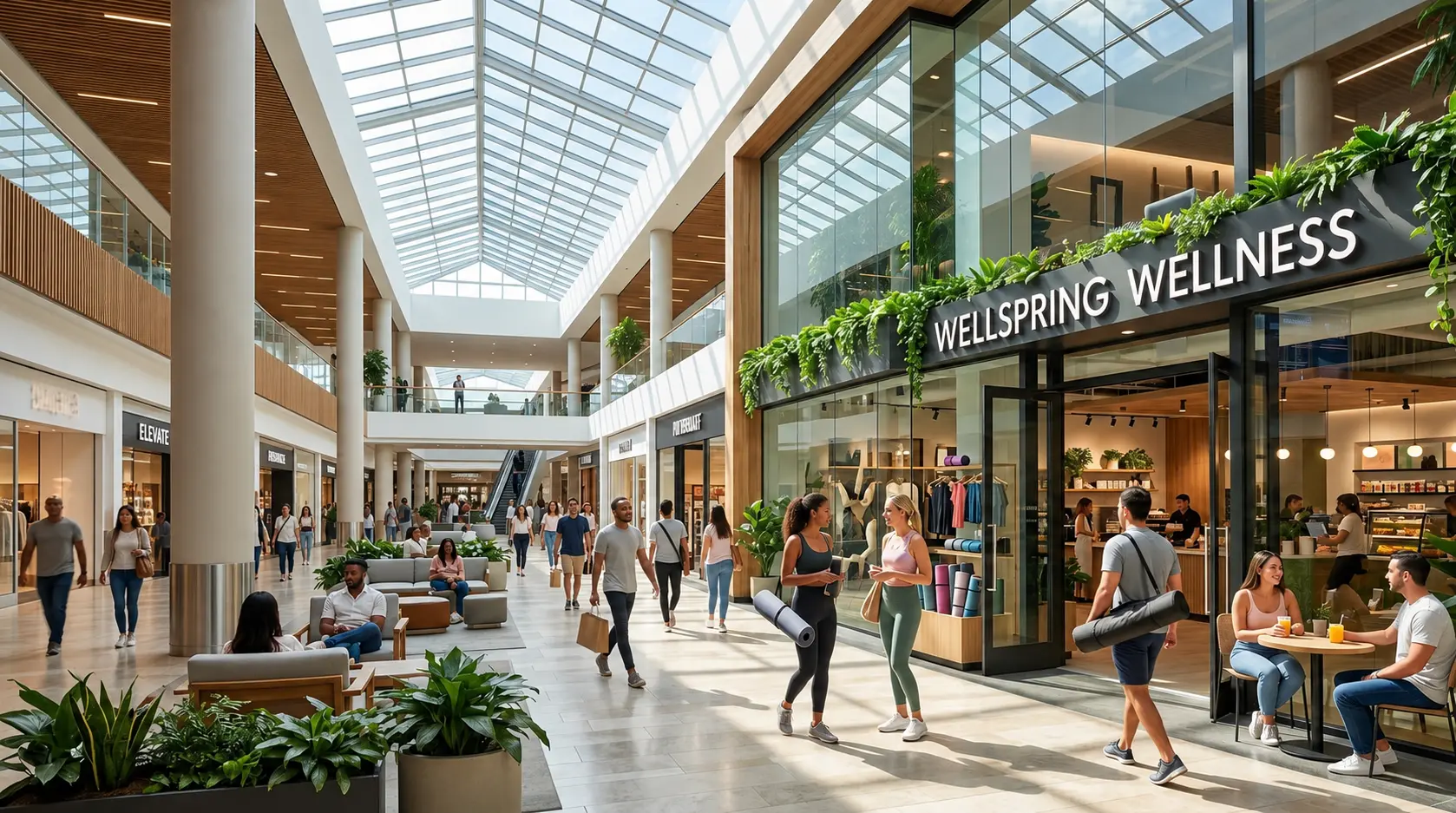
Consumers who finish a workout or leave a yoga class are in a documented consumption mindset. They buy food, supplements, and run errands they would otherwise have done separately. The gym visit becomes the reason the trip happens, and everything within walking distance benefits. Research from ICSC and Creditntell shows a consistent, quantifiable lift for retailers who co-locate with fitness operators across market sizes and retail formats. The lift is not hypothetical. It is something you can plan around if you know where the wellness anchor is and whether it is actually performing.
Did You Know?
Retailers located in a shopping center with a gym receive an average of 2.5% more visits per month compared to those in centers without fitness businesses.
Source:
ICSC / Creditntell 2025
A 2.5% monthly lift compounds. Across 12 months and multiple revenue streams it becomes material, and for a food concept or specialty retailer on tight margins, that consistent additional traffic can be the difference between a location that works and one that does not. Before you evaluate any retail or restaurant site, map the wellness operators within a half-mile radius. A gym creates daily traffic. A med-spa creates appointment traffic. Both matter, but they serve different parts of your week.
Best Wellness Anchor Tenant Types for Retail Centers in 2026
Not every wellness business functions as a true anchor. The distinction is visit frequency and membership size. Below are the operator types that currently drive the most consistent retail co-tenancy value.
Operator Type | Best For | Honest Limitation |
|---|---|---|
Traditional Gyms and Fitness Chains | Food concepts, supplement retailers, athleisure brands, errand-category retailers | Large-format footprint. Exclusivity clauses can limit overall wellness density in a center |
Boutique Fitness Studios (Cycling, Yoga, Pilates, HIIT) | Premium food and beverage, athleisure retail, beauty, lifestyle concepts | Smaller footprint means lower absolute member count than a traditional gym |
Physical Therapy and Rehab Clinics | Pharmacy, health food, medical-adjacent retail, sit-down food concepts | Appointment-driven traffic is predictable but less spontaneous than gym traffic |
Med-Spas and Aesthetics Clinics | Premium beauty retail, nail and hair services, upscale food concepts | Visit frequency is lower (monthly or bi-monthly). Strong demographic signal, weaker raw traffic volume |
Nutrition and Supplement Retailers | Gyms and fitness studios seeking complementary co-tenancy, health food cafes | Higher closure risk from e-commerce pressure. Verify current performance before treating as a stable anchor |

Identifying Wellness-Anchored Markets Before You Sign a Lease
Knowing that wellness drives traffic is useful. Knowing whether the specific operators near your candidate site are actually performing is what separates a good location decision from a bad one. A gym that is half-empty at peak hours is not an anchor. It is a liability. The research comes down to three things: which wellness operators exist within your target radius, how they are currently performing based on live review data and customer sentiment, and how candidate sites compare across markets.
Traditionally that took days of manual searching across Google Maps, Yelp, and Instagram. Most independent operators skip most of those steps and go with gut feeling. MapQuery’s location intelligence features close that gap by pulling live data from all those sources simultaneously and summarizing it into cited answers you can save and share. For franchise operators, the franchise site selection workflow structures the process around one project per territory, so comparisons stay clean and recommendations are source-backed rather than gut-feel.
Who Benefits Most from Wellness Anchor Research
The Franchisee Evaluating Three Sites in the Same Metro
A franchisee has narrowed a fast-casual food concept to three candidate locations in the same metro area. All three have comparable traffic counts on paper. The distinguishing variable is co-tenancy. She opens MapQuery, creates a separate saved project for each candidate site, and runs a Just Ask a Question query for fitness studios and gyms within a half-mile radius of each. Site A has two boutique studios with strong recent reviews and consistent Instagram activity. Site B has a large-format gym with a significant volume of recent negative reviews flagging overcrowding and management issues, signaling declining membership. Site C has no meaningful wellness presence within the target radius. The choice becomes clear. She saves her AI results, skips re-running the same queries, and brings the documented comparison to her franchise development meeting.
The Commercial Broker Advising a Strip Center Owner
A commercial real estate broker needs to advise a strip center owner on which tenant mix will maximize co-tenancy value after a 12,000 square foot anchor vacancy. The owner wants data, not opinion. The broker uses
MapQuery’s competitor mapping workflow
to analyze the wellness operator landscape within a two-mile radius and identifies a gap: no boutique cycling or HIIT studio exists in the immediate trade area despite demographic signals that strongly support demand. He builds the case for actively recruiting a boutique fitness operator as the replacement anchor. The owner leaves with a documented, data-backed recruitment pitch. The broker has a repeatable research process for every future advisory engagement.
The Independent Retailer Opening a Second Location
An independent athletic apparel retailer is profitable at her first location, which sits adjacent to a high-performing CrossFit gym. She wants to replicate that co-tenancy advantage at a second location in a new market. She uses MapQuery’s Customer Pulse feature to evaluate customer sentiment around fitness operators in three target neighborhoods and surfaces one area where a relatively new boutique studio has a sharp upward trajectory in recent reviews, indicating a growing, loyal membership base. She opens her second location in that strip. The co-tenancy logic that worked the first time is now systematic rather than accidental.

How We Help Research Wellness as the New Anchor Tenant
MapQuery pulls live data from Yelp, Google Maps, TripAdvisor, and Instagram and summarizes it into cited answers you can verify. The features most relevant to wellness anchor research:
- See What’s Around You: Map every wellness operator in a defined area instantly.
- Just Ask a Question: Ask plain-English questions about any location and get a sourced answer.
- Customer Pulse: Aggregate review sentiment to distinguish a thriving anchor from a declining one.
- Saved Map Markers: Pin operators that meet your criteria across multiple research sessions.
- Save Your Research / Saved AI Results: Keep comparisons organized by site without re-running queries.
The free tier includes 10 daily research credits and up to 3 saved projects with no credit card required. The Pro plan provides 1,000 monthly credits and up to 500 locations per project. See mapquery.ai/pricing for current details.
Did You Know?
Fitness operators now account for nearly 30% of all service-based retail leases in 2026, up from 20% in 2016, confirming their dominance as the lead sub-sector of the new anchor class.
Source:
CRE Daily 2026
That 30% share is still growing. Operators who position near high-quality wellness anchors now are ahead of a curve that will only get more competitive. The MapQuery documentation covers the full research workflow, and the map preview lets you explore live location data with no login required.
Frequently Asked Questions
What does wellness as the new anchor tenant mean for retail real estate?
Wellness as the new anchor tenant means that gyms, yoga studios, med-spas, and similar service businesses now drive foot traffic to retail centers the same way a department store once did. Their repeat-visit model pulls consistent consumer flow that neighboring retailers and food operators depend on for baseline revenue throughout the week.
Which wellness businesses generate the most foot traffic as anchor tenants?
High-frequency fitness operators, including boutique fitness studios, traditional gyms, and physical therapy clinics, generate the most consistent foot traffic because members visit multiple times per week. Med-spas and nutrition retailers rank next due to appointment-based repeat visits and a high-income customer demographic.
How do I find retail locations anchored by wellness tenants?
You can use a location intelligence tool like MapQuery.ai to search any geographic area for wellness operators, map their density, and read aggregated customer sentiment data pulled live from Yelp, Google Maps, TripAdvisor, and Instagram. This lets you identify which centers already have strong wellness anchors before you sign a lease or commit to a franchise territory.
Is co-locating near a gym actually worth it in 2026?
Yes. Research from ICSC shows that retailers located in a shopping center with a gym receive an average of 2.5% more monthly visits compared to centers without a fitness business. That lift compounds across a full lease term and is measurable, not theoretical, making gym proximity a legitimate factor in site selection financial modeling.
What is the difference between a traditional anchor tenant and a wellness anchor?
A traditional anchor, like a department store, pulled large one-off shopping trips driven by sales events and seasonal buying cycles. A wellness anchor pulls short, high-frequency visits, often daily or multiple times per week, creating more consistent pedestrian flow and more spontaneous adjacent purchases throughout the entire week rather than during specific events.
How does MapQuery.ai help with wellness anchor tenant research?
MapQuery.ai lets you search any market area for specific wellness business types, surface customer sentiment pulled live from multiple platforms, and save candidate sites into projects for side-by-side comparison. The free tier gives you 10 daily research credits with no credit card required, and the Pro plan at mapquery.ai/pricing provides 1,000 monthly credits for larger research workloads.
Final thoughts
Wellness as the new anchor tenant is the dominant organizing principle of US retail leasing in 2026. CoStar, ICSC, and CRE Daily all point the same direction: fitness and wellness operators are filling the structural role department stores once held, with more durable, frequency-driven traffic patterns.
For any business owner making a location decision this year, the research needs to go beyond whether a gym exists nearby. It needs to assess whether that anchor is actually performing, growing, and drawing the demographic you need. That research is now fast, repeatable, and accessible without a corporate real estate budget.

Research Any Location in Minutes
See every wellness operator near your candidate sites, read live customer sentiment, and compare markets side-by-side. Free tier includes 10 daily research credits and no credit card required.